






Cabinet Hinges for Commercial Furniture Design
A cabinet can look right in a drawing and still frustrate the people using it. A door catches the next front, blocks a pull-out tray, or closes noisily beside a meeting room. For commercial furniture designers, hinge selection works best when it follows the cabinet’s geometry, access needs, and expected use. The finish comes after those relationships are clear.
Door position sets the hinge geometry
The door’s position relative to the cabinet opening determines the required hinge arrangement. Face-frame construction provides a front frame for mounting; frameless construction exposes the cabinet sides. A hinge and mounting plate must suit that construction as well as the intended overlay or inset.
Overlay describes how far the door overlaps the cabinet edge. Inset fronts sit within the opening. These terms describe door placement, while concealed or butt describes hinge construction. A concealed hinge can therefore serve an overlay or inset application when the correct configuration is selected.
|
Door arrangement |
Relationship to the cabinet |
Design consequence |
|
Full overlay |
Door covers most of the cabinet side edge |
Coordinate overlay with the desired reveal |
|
Half overlay |
Two doors share a central partition |
Allow both fronts to move without collision |
|
Inset |
Door sits inside the opening |
Resolve perimeter gaps and edge clearance |
This distinction matters when furniture ranges mix shared partitions and end cabinets. Matching the visible fronts does not necessarily mean using the same hinge arm or plate everywhere. Resolve those differences before releasing drilling patterns.
Butt and concealed hinges shape the cabinet
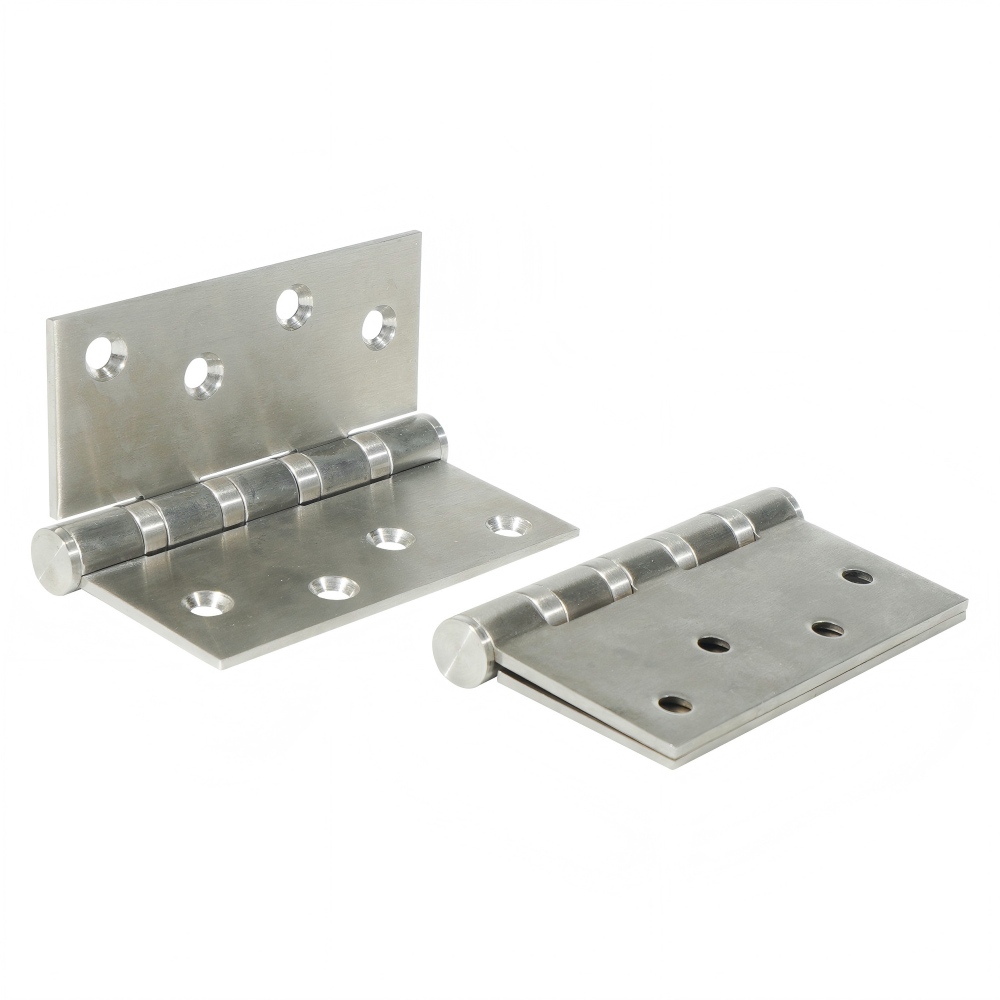
Hinge visibility changes both the appearance and the construction detail. Traditional cabinet door butt hinges use two leaves joined at a pivot. Their visible knuckle can suit furniture with an exposed hardware detail, provided the leaf position and door edge accommodate the swing.
That approach gives designers a practical alternative when visible hardware belongs in the design. Sunstone Ruize(STRZ) supplies stamped hinges for cabinet applications; its ST011021 butt-hinge range includes round and square corner options. Those shapes affect the prepared recess and visible edge detail, so approve the corner form alongside the furniture sample.
Concealed cabinet hinges support a clean exterior by locating the mechanism inside the cabinet. Many European cup designs use a 35 mm cup, but that diameter alone does not define drilling depth, edge distance, or plate position. Thin fronts need a compatible fastening solution rather than an assumed standard boring pattern.
Adjustment also deserves attention on repeated cabinet runs. Where a selected system permits side, height, and depth adjustment, installers can refine the reveals after assembly. The available adjustment range remains specific to the hinge and plate combination.
Opening clearance and closing action
Usable access depends on the door’s entire movement. A wide opening angle is useful only if the door clears adjacent walls, handles, and internal fittings. For an office storage cabinet with pull-out trays, check whether the open door still protrudes into the tray’s path.
The room layout can make a smaller controlled opening more practical. A cabinet beside a wall may need an opening limiter compatible with the selected hinge. A corner location may need a different hinge geometry. Check the actual swing envelope instead of choosing solely by the advertised angle.
Closing action is a separate choice within furniture door hinges. Self-closing action draws the door towards the closed position; soft closing damps its final movement. A hinge can provide both, but the terms are not interchangeable. In meeting-room furniture, evaluate the closing feel on the finished door before assuming that a soft-close label solves the noise requirement.
Door weight and surroundings narrow the choice
The complete door determines the hinge demand. Include handles, glazing, mirrors, or applied panels when assessing its weight. Height, width, hinge spacing, and the cabinet substrate also matter. A hinge-count chart for one product family should not become a universal rule for every cabinet.
The fixing detail deserves the same attention as the hinge body. Confirm fastener suitability for the actual panel material and the selected mounting method. A robust metal hinge cannot compensate for an unsuitable fixing in the door or carcass.
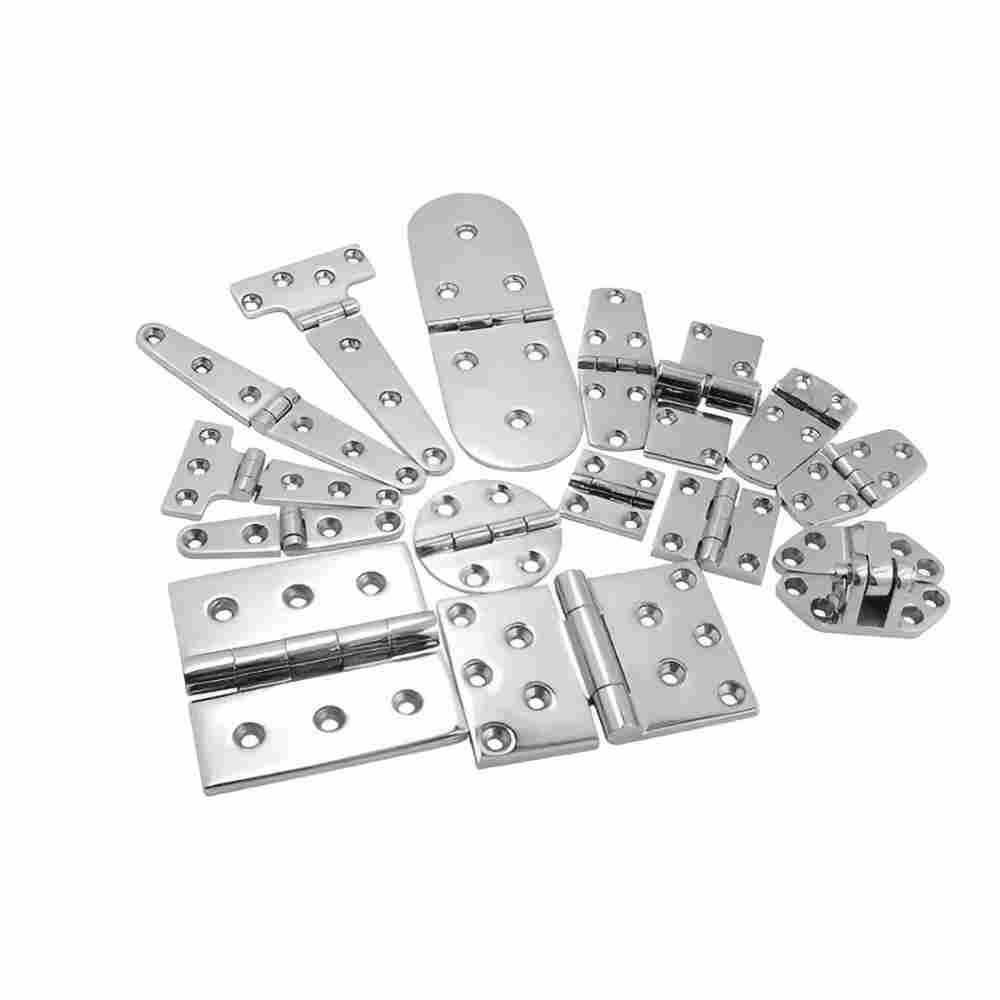
Moisture and cleaning conditions influence material selection. Stainless steel cabinet hinges merit consideration for furniture near sinks or in regularly damp areas, but stainless steel still needs suitable cleaning and care. Confirm the grade and the materials of pins and fasteners, not just the appearance of the hinge leaves.
Finish approval should use the intended furniture environment. Check compatibility with the cleaning products the operator will use, especially on exposed hardware. Treat corrosion resistance, decorative appearance, and closing performance as separate requirements; a polished surface establishes none of the other two.
A cabinet prototype tests the complete choice
A representative prototype brings the geometry and operating conditions together. Fit the intended front, handle, hinges, and internal fittings. Check the reveal when closed, access when open, and the movement through the full arc. Repeat the review for a heavier or wider front if the furniture range includes one.
Unusual fronts may justify custom cabinet door hinges. Size, thickness, material, and surface treatment can be developed around a particular cabinet detail. Customization still needs prototype verification: changing a leaf or hole pattern does not establish a load rating or prove clearance on the assembled furniture.
A hinge choice ready for production
The right hinge preserves the intended front alignment while allowing useful access and controlled movement. For a commercial furniture range, carry the approved hinge, plate, fastening detail, and door configuration together into production. Keeping that combination intact gives the factory a clear reference and the installation team a cabinet they can adjust as intended.
Συχνές ερωτήσεις
Are overlay and concealed hinges different choices?
They describe different features. Overlay defines the door’s position; concealed describes hardware visibility. A concealed system can support several door positions with suitable hinge and plate combinations.
Can butt hinges be used on commercial cabinets?
Yes, where their geometry, fixing method, and specified duty suit the cabinet. They are especially relevant when a visible knuckle is an intentional furniture detail.
How many hinges does a cabinet door need?
Use guidance for the exact hinge model and the finished door’s weight and dimensions. Include added handles or glazing, and verify hinge spacing and fixing conditions.
Does soft closing guarantee a quiet cabinet?
No. Damping controls part of the closing movement. Door weight, adjustment, buffers, and contact with the carcass still influence the finished result, which needs checking on the assembly.
Can a replacement hinge use the existing holes?
Only after confirming the fixing pattern, cup requirements where applicable, overlay, and mounting plate compatibility. Similar appearance does not establish interchangeability.


 Συμβουλευτείτε
 Το Whatsapp
 Αφήστε μήνυμα
 κορυφαία