







How Mechanical Connectors Shape Knockdown Furniture
Flat-pack furniture succeeds when every joint can be found, aligned and released without damaging the panel. For European distributors and project-furniture teams, the key question is which mechanical connector logic keeps assembly repeatable while still allowing service or relocation.
Why knockdown furniture needs a different joint logic
Knockdown furniture must travel, assemble, disassemble and assemble again without losing alignment. A permanent glued joint is rarely the best answer when a distributor serves flat-pack cabinets, modular shelving or project furniture. Mechanical connectors keep the joint serviceable, so a panel can be replaced or a room layout can change without destroying the surrounding parts.
The connector also controls how loads move through the panel. A cam, dowel, angle or plate connector pulls faces together, limits racking and gives installers a repeatable reference. That repeatability matters in European trade projects, where a product may pass through several warehouses and installation teams before the final handover.
Mechanical connectors for knockdown furniture work best when the wood joint connector is treated as part of a complete interface. A wooden connector for furniture may be simple to install, yet the surrounding panel edge, screw head and tool clearance determine whether the finished unit feels precise. A pilot assembly gives the team evidence before the range is released.
For a broader view of τύποι ξύλινων συνδετήρων, see the STRZ wooden connector range when mapping a furniture family to connector geometry.
The connector families behind a serviceable assembly
Panel-to-panel connectors
Panel-to-panel connectors join cabinet sides, shelves and backs while keeping the visible face clean. Dowel-based systems help locate the parts, while a mechanical lock supplies clamping force. The useful specification is not the connector name alone; it is the hole pattern, panel thickness range, screw access and tolerance that the installer can repeat.
Angle and bracket connectors
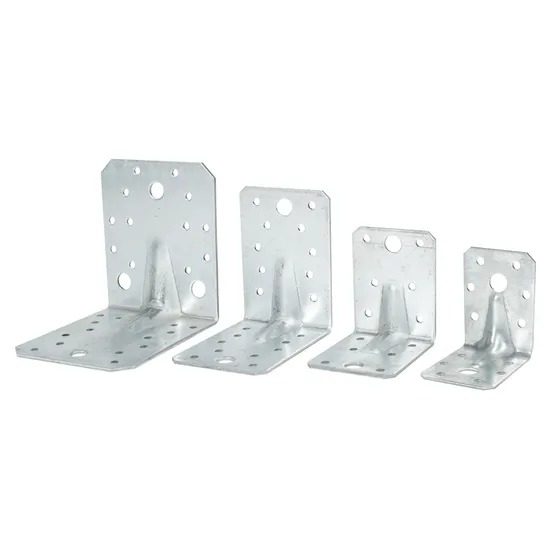
Angle connectors suit frames, reinforcement points and furniture that needs a visible service joint. STRZ supplies galvanized wooden connectors including angle brackets, beam hangers and related structural hardware. For knockdown furniture, the same principle applies at a smaller scale: the angle should locate the joint, accept the intended fastener and leave room for a tool.
Dowel and insert combinations
Dowel and insert combinations are useful when a product needs accurate alignment but also needs to come apart. The dowel carries positioning; the insert or bolt carries clamping. In a wholesale range, keeping these functions distinct makes it easier to match a connector set to panel thickness and expected assembly frequency.
When a project needs a clear product family, explore furniture wood connectors alongside the application details used by the design and installation teams.
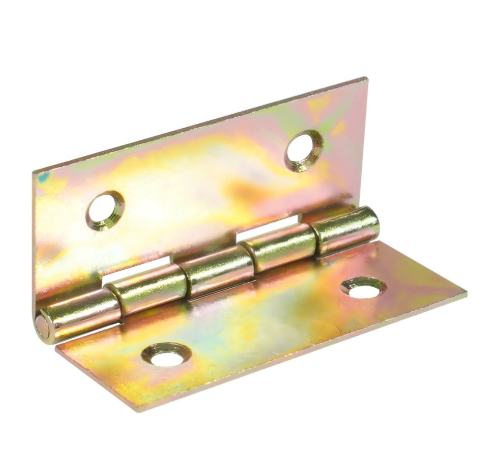
A practical selection matrix for European trade projects
Selection becomes faster when the connector is judged against the joint rather than against a catalogue label. Ask how many times the furniture will be assembled, which face must remain clean, how much installation access is available and whether the joint sits in a dry interior or a humid service area.
|
Joint situation |
Useful connector logic |
Checks before release |
|---|---|---|
|
Flat-pack cabinet panels |
Dowel plus mechanical lock |
Panel thickness, hole spacing, tool access |
|
Open shelving frame |
Angle or plate connector |
Racking direction, visible finish, fastener path |
|
Modular display unit |
Removable connector set |
Reassembly cycles, replacement access, packaging |
|
Heavy wood frame |
Reinforced bracket or hanger |
Load path, steel grade, corrosion exposure |
The matrix does not replace structural design. It keeps commercial and technical teams focused on the few interface details that determine whether a connector will assemble cleanly at scale.
This small review also helps a distributor explain the selected hardware clearly to installers, service teams and end customers across different European markets.
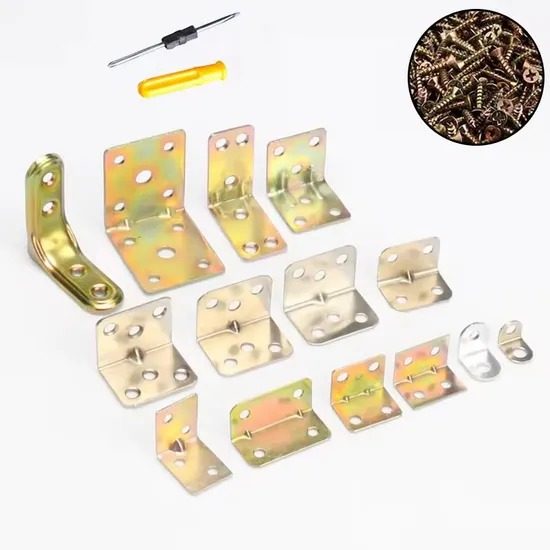
Quality checks that protect assembly consistency
Incoming checks should confirm the hole pattern, formed angle, coating condition and burr control against the approved drawing. A connector that is dimensionally close but not consistent can create cumulative error across a cabinet run.
Production checks should also follow the assembly sequence. Test a representative panel pair with the intended screw, dowel or insert, then inspect alignment after the joint is released and reassembled. The result is more useful than a visual check of loose hardware alone.
STRZ lists zinc-plated, galvanized and stainless options across its wood connector range. The finish must match the product environment and the specified appearance; do not treat one coating as universal for every furniture application.
For a direct product reference, review μεταλλικές συνδέσεις για ξύλο and confirm the final geometry against the furniture drawing before volume production.
Summary
Mechanical connectors make knockdown furniture repeatable when geometry, access and reassembly are considered together. European distributors and project-furniture teams should lock the joint type, panel interface and finish before packaging a connector set. That sequence reduces installation surprises while keeping future service work practical.
Confirm the joint or hinge environment before selecting the material.
Keep the approved drawing and sample with the replenishment record.
Use a small pilot assembly to verify fit before volume release.
If you have any requirements, please contact our team for a product and application discussion.
Συχνές ερωτήσεις
Which connectors suit knockdown furniture panels?
Dowel and insert combinations, cam-style locks and compact panel connectors are common choices. The correct option depends on panel thickness, hole spacing, access and the number of planned reassembly cycles.
Are angle brackets suitable for flat-pack furniture?
They can be useful for frames, reinforcement and serviceable joints where a visible bracket is acceptable. Check the load path, screw access and finish before selecting them for a customer-facing surface.
What should a distributor confirm before ordering?
Confirm drawings, panel thickness, hole positions, finish, fastener compatibility, packaging units and the intended installation sequence. A small sample assembly can expose tolerance issues before a larger order.
Do galvanized connectors work indoors?
Galvanized and zinc-plated finishes are commonly used indoors when their appearance and corrosion needs fit the project. The final choice should follow the room environment and the approved specification.
Can connectors be customized for a furniture program?
Customization may cover dimensions, hole positions and related functions when the design requires it. STRZ lists dimension customization for wooden connectors, with commercial conditions confirmed for each program.

 Συμβουλευτείτε
 Το Whatsapp
 Αφήστε μήνυμα
 κορυφαία