





How to Stabilise Fence Post with Ground Post
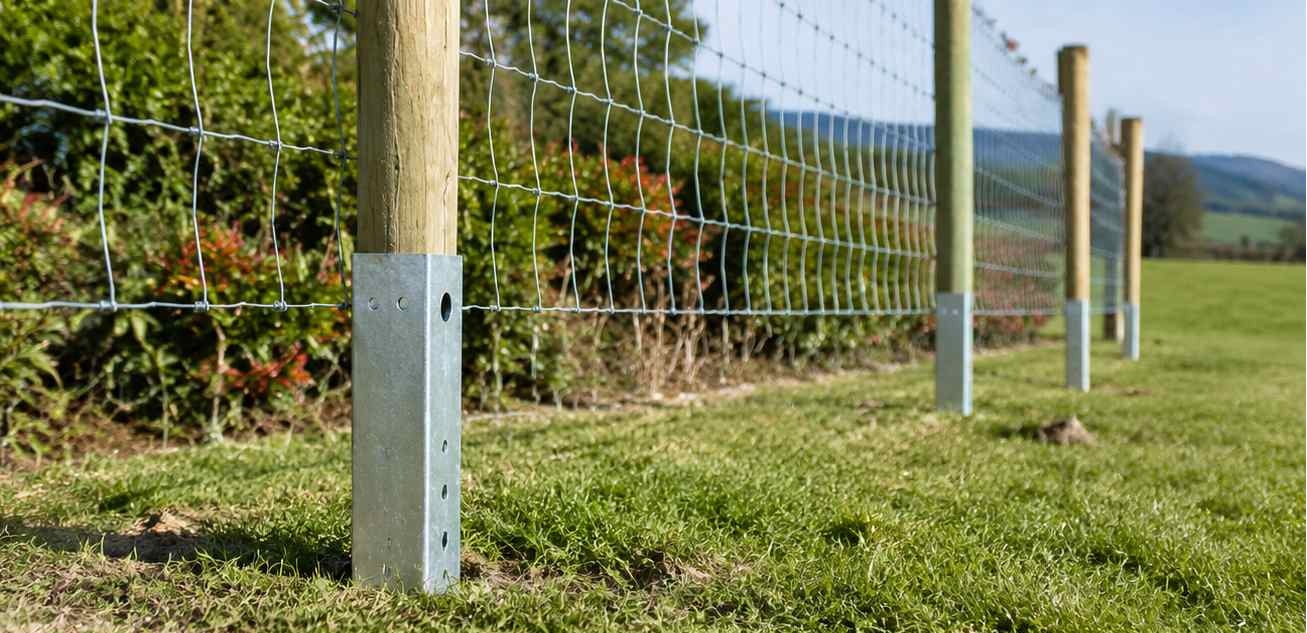
In today’s global construction and fencing markets, stability, speed of installation, and compliance with regional building regulations have become decisive factors for B2B buyers. Traditional concrete foundations are increasingly being replaced by modular steel anchoring systems that offer faster deployment and lower lifecycle costs. Sunstone Ruize (STRZ) has been continuously advancing its Ground Post solutions for export-driven infrastructure, landscaping, and industrial fencing projects, where consistency, corrosion resistance, and installation efficiency are critical requirements for contractors and distributors.
Why Fence Posts Fail in Fence Post Ground Applications
Failure in fence post ground installations is often linked to environmental stress and incorrect foundation selection rather than surface-level installation errors. Soil erosion, freeze-thaw expansion cycles, and prolonged moisture exposure gradually reduce the holding capacity of traditional embedded posts. In industrial environments such as railways, highways, and construction perimeters, vibration further accelerates instability.
When contractors rely on inconsistent foundation methods, the fence post ground structure becomes vulnerable to tilting and load imbalance. This is particularly critical in regions with strict compliance rules, where structural deformation may result in regulatory penalties or project rejection.
How Ground Posts and ground screws for fence posts Work in Structural Systems
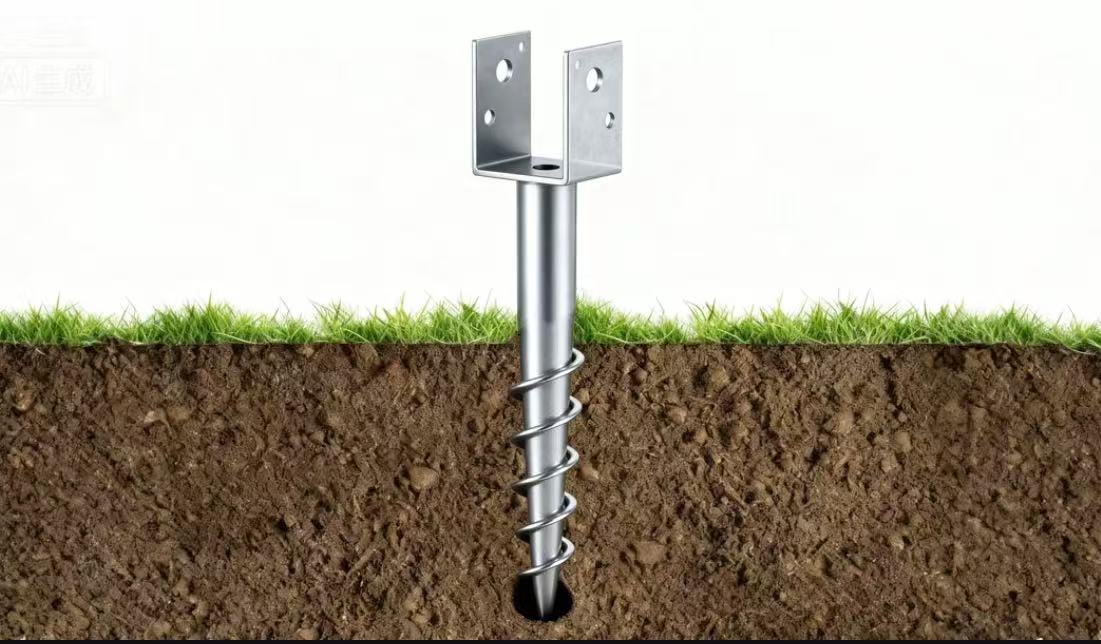
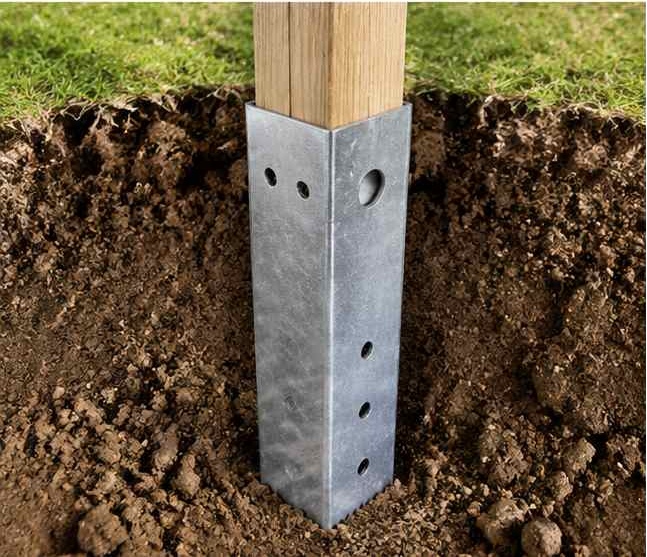
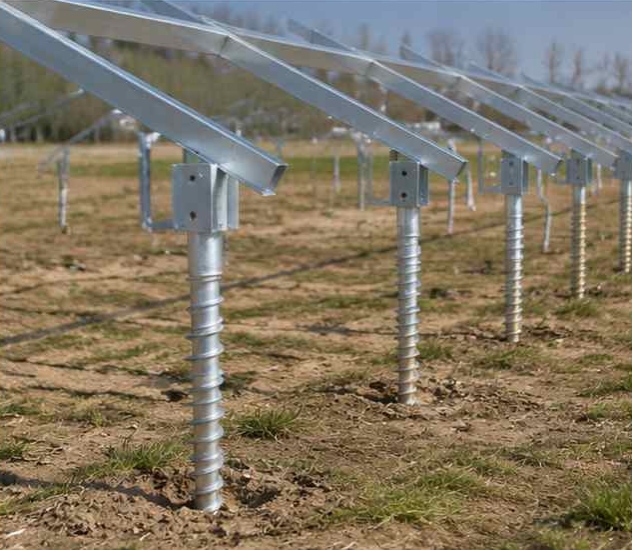
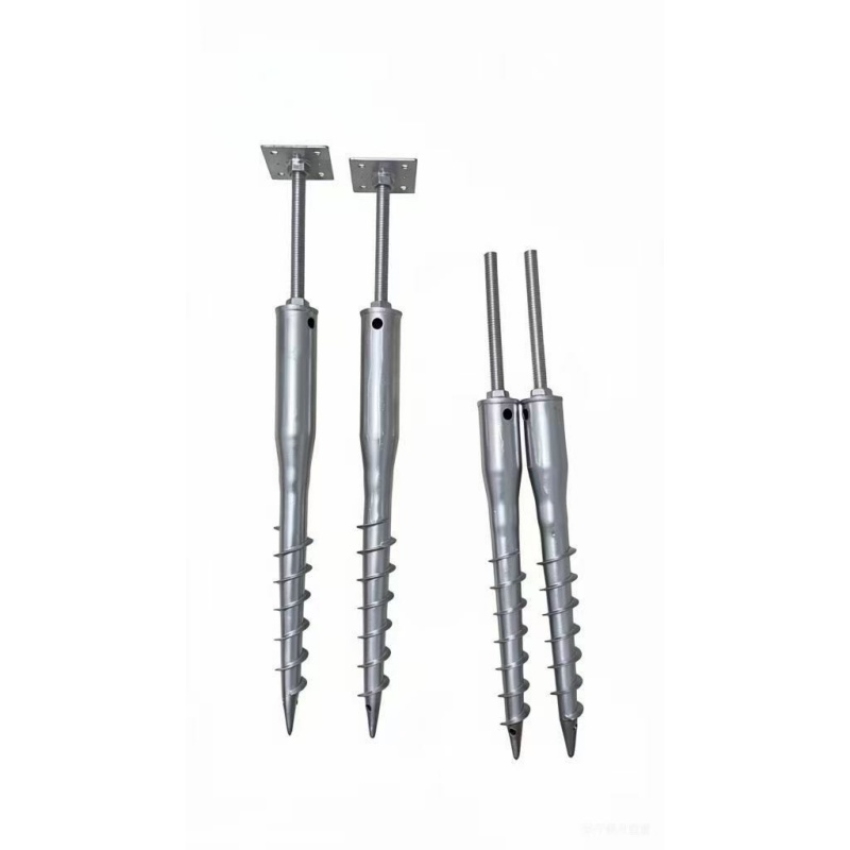
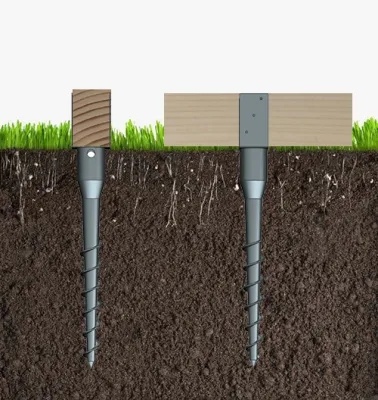
Modern Ground Post systems operate through controlled load transfer mechanisms. Instead of relying on concrete curing, ground screws for fence posts are driven directly into the soil, creating a continuous threaded interface that locks into the ground structure. This method reduces excavation requirements and allows immediate load-bearing capacity.
In comparison to traditional fence post ground installation methods, Ground Post anchors offer higher adaptability in uneven terrain and temporary construction environments. They are widely used in solar infrastructure, temporary fencing systems, and modular building foundations where repositioning and scalability are required.
The integration of ground screws for fence posts also improves installation efficiency in large-scale procurement projects, especially where time-sensitive deployment is critical.
Sunstone Ruize (STRZ) Ground Post Technical Specifications and Structural Performance
Sunstone Ruize (STRZ) manufactures Ground Post systems designed for international export standards, supported by automated stamping, welding, and surface treatment lines. The following specification data is based on verified product catalog configurations from Sunstone Ruize (STRZ) ground anchor systems.
|
Product Code / Model |
Dimension (mm) |
Hole Configuration |
Weight (kg) |
Suggested Application |
|
25278 |
80×80×800 |
4×ø5, 2×ø18, 4×ø10.5 |
2.93 |
Light fencing and landscaping post support |
|
25280 |
110×110×1000 |
4×ø5, 2×ø18, 4×ø10.5 |
3.84 |
Larger fence post ground support systems |
These Ground Post anchors are engineered for multi-environment compatibility, supporting both permanent and semi-permanent fencing structures across global infrastructure projects.
How Ground Post Systems Are Installed in Real Fence Post Ground Projects
In practical construction environments, Ground Post installation begins with soil assessment and load requirement confirmation. Contractors typically align the Ground Post position before mechanical driving begins, ensuring vertical accuracy under torque-controlled insertion. Unlike traditional fence post ground methods, there is no curing delay, which allows immediate structural loading.
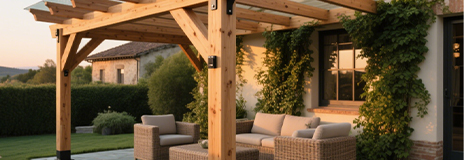
In supported export projects, including European garden landscape installations, ground post systems have been applied in modular pavilion structures where installation time was reduced significantly while maintaining structural consistency. In UK decking applications referenced in Sunstone Ruize (STRZ) case documentation, ground screw-based foundations allowed full installation within a single working cycle, eliminating concrete dependency and reducing site disruption.
This installation method is particularly valuable for contractors managing multi-site projects where standardized fence post ground performance is required across different geographical locations.
Material Engineering and Compliance in Global Fence Post Ground Markets
Different regions impose different regulatory frameworks for fence post ground systems, particularly in corrosion resistance, load certification, and environmental compliance. Sunstone Ruize (STRZ) Ground Post systems use galvanized steel structures designed to withstand humidity, salt exposure, and temperature fluctuations ranging from -40°C to 80°C.
Hot-dip galvanization and penetration galvanizing processes are applied depending on application scenarios. In coastal infrastructure projects, enhanced coating thickness improves service life, while in urban installations, smoother surface treatment ensures installation precision and adjustability.
For global B2B buyers, compliance with ASTM and DIN standards is a critical purchasing factor, especially in sectors such as transportation infrastructure, rail systems, and industrial fencing.
Ground Screws for Fence Posts and Global Market Expansion Trends
The adoption of ground screws for fence posts has expanded rapidly due to infrastructure modernization and the demand for faster construction cycles. In renewable energy projects, solar farms increasingly rely on Ground Post foundations to reduce environmental impact and accelerate deployment timelines.
Urban infrastructure projects also integrate ground screws for fence posts in traffic signage, EV charging stations, and modular public facilities. The ability to install and reuse Ground Post systems aligns with circular construction principles, making them suitable for temporary and permanent installations.
Sunstone Ruize (STRZ) continues to expand its export capacity, with documented deliveries across more than 20 countries and growing adoption in European and North American markets.
Conclusion
Modern fence post ground engineering is shifting toward modular, reusable, and high-efficiency systems that can adapt to diverse soil and regulatory conditions. Ground Post technology provides a practical alternative to traditional foundations by improving installation speed, reducing environmental impact, and ensuring long-term structural reliability. Sunstone Ruize (STRZ) continues to support global contractors with scalable Ground Post solutions designed for industrial fencing, infrastructure, and large-scale commercial applications, ensuring consistent performance across international markets.
FAQ
What makes Sunstone Ruize (STRZ) Ground Post suitable for fence post ground stability?
Sunstone Ruize (STRZ) Ground Post systems provide reinforced steel anchoring designed for consistent load transfer in fence post ground applications, ensuring stability across varied soil conditions and long-term outdoor exposure.
How does Sunstone Ruize (STRZ) Ground Post improve installation of ground screws for fence posts?
Sunstone Ruize (STRZ) engineering allows ground screws for fence posts to be installed without concrete curing, enabling immediate load-bearing performance and reducing construction time significantly in fence post ground projects.
Can Sunstone Ruize (STRZ) Ground Post be used in different fence post ground soil conditions?
Yes, Sunstone Ruize (STRZ) Ground Post is designed for clay, sandy, and mixed soils, making it adaptable for global fence post ground installations in both urban and rural environments.
How do ground screws for fence posts improve fence post ground stability?
Ground screws for fence posts improve fence post ground stability by creating a deep-thread mechanical lock in soil, reducing movement and increasing load resistance without concrete curing.
Why is fence post ground failure common in traditional installations?
Fence post ground failure often occurs due to soil erosion, moisture penetration, and improper compaction, which reduce long-term stability in conventional concrete-based systems.

 Consult
 Whatsapp
 Leave Message
 top
top