







Ground Screws for Fence Posts Under Heavy Loads
A fence can look straight on installation day and still lean after the first strong wind. For contractors and hardware distributors, that makes ground screws for fence posts a question of matching the whole fence to the ground beneath it. A heavier screw may help, but reliable selection also depends on panel exposure, soil resistance and the post connection. The useful meaning of heavy duty is a foundation assembly with evidence for the job it must perform.
Fence panels turn wind into a foundation demand
Wind acts across the fence panel and transfers force through the rails into each post. At ground level, that force creates sideways loading and a bending moment. A vertical load rating alone therefore cannot establish whether a fence post screw anchor will keep a boundary fence upright.
Panel height, post spacing and the amount of open area all affect that demand. Consider a contractor replacing open mesh with solid timber panels on an existing post line. The new panels change the wind exposure, so retaining the previous foundations needs a fresh assessment even when the posts still look sound.
Gate posts deserve separate attention because they also carry an offset gate and repeated movement. When evaluating ground screws for fence posts, separate ordinary line posts from gate, end and corner positions. A single product label does not establish suitability for every position along the fence.
Soil determines what the screw can mobilize
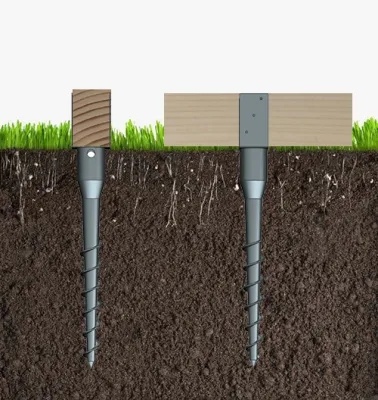
The surrounding soil supplies the resistance that makes the buried screw useful. Loose fill, changes in soil layers and obstructions can alter how a screw installs and performs. A screw that feels firm during installation has not necessarily demonstrated the lateral resistance needed by a tall screen.
Site assessment connects the fence demand to an appropriate screw configuration. For exposed or demanding installations, the responsible designer should determine whether site load testing is needed and what movement is acceptable. Tests must address the relevant direction of loading; a pull-out result cannot substitute for a lateral assessment.
Installation feasibility belongs in this decision before the full fence line is ordered. Restricted access, buried services and stones may change the tools or method required. A difficult location may justify a different foundation solution. Ground screws remove the concrete-curing stage, but they do not remove the need to confirm ground conditions and safe installation positions.

Length and wall thickness answer different questions
Screw length and tube thickness describe different parts of the selection problem. Length affects the possible embedment and soil layers reached. Wall thickness contributes to the steel section’s resistance, alongside diameter, steel grade and geometry. Neither dimension on its own defines a heavy duty ground screw.
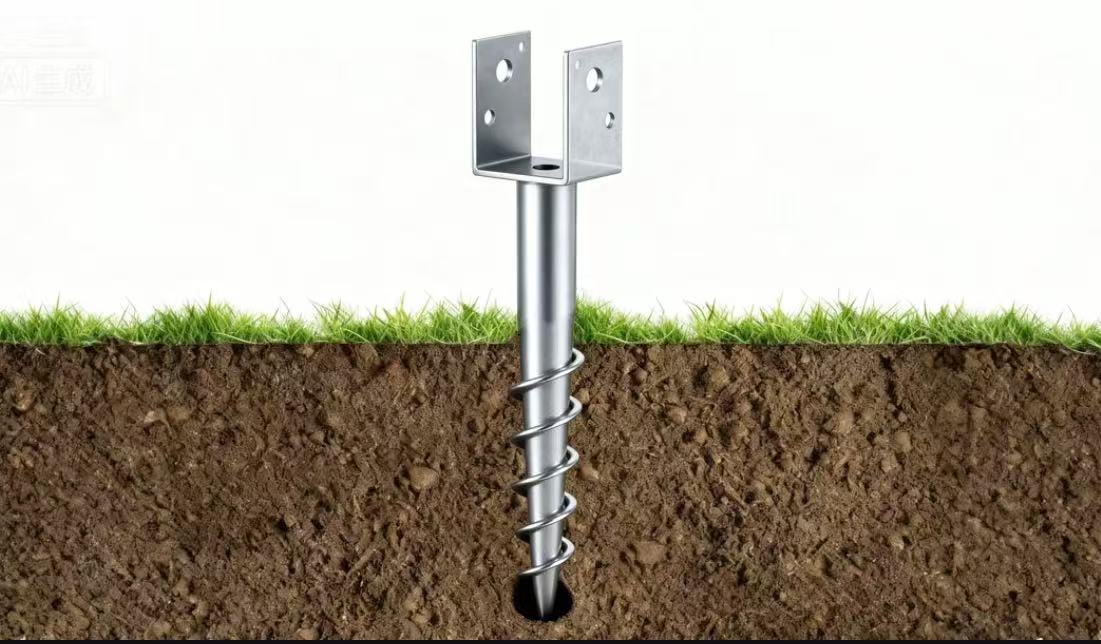
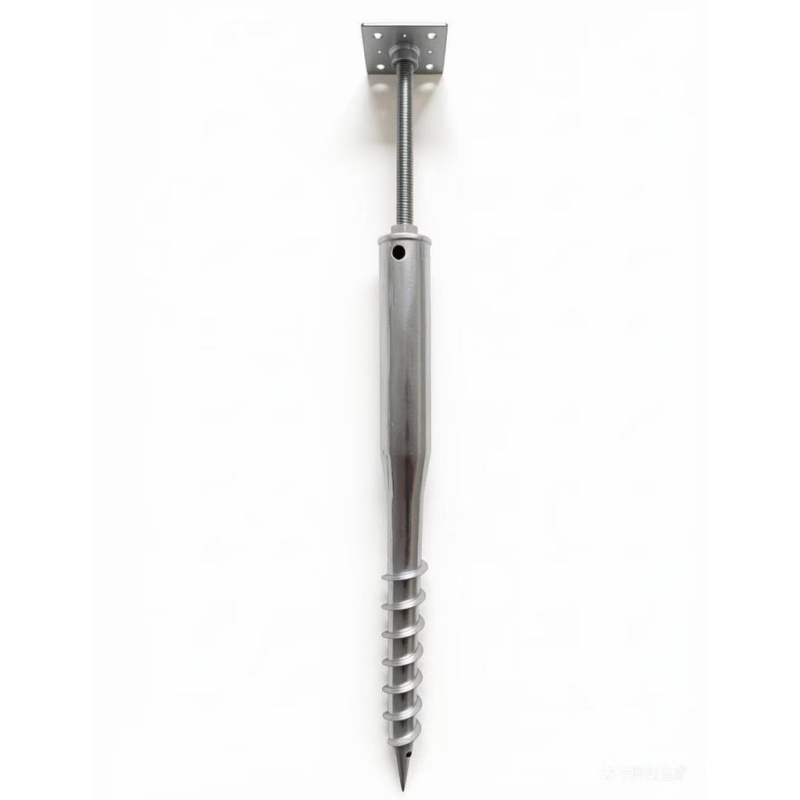
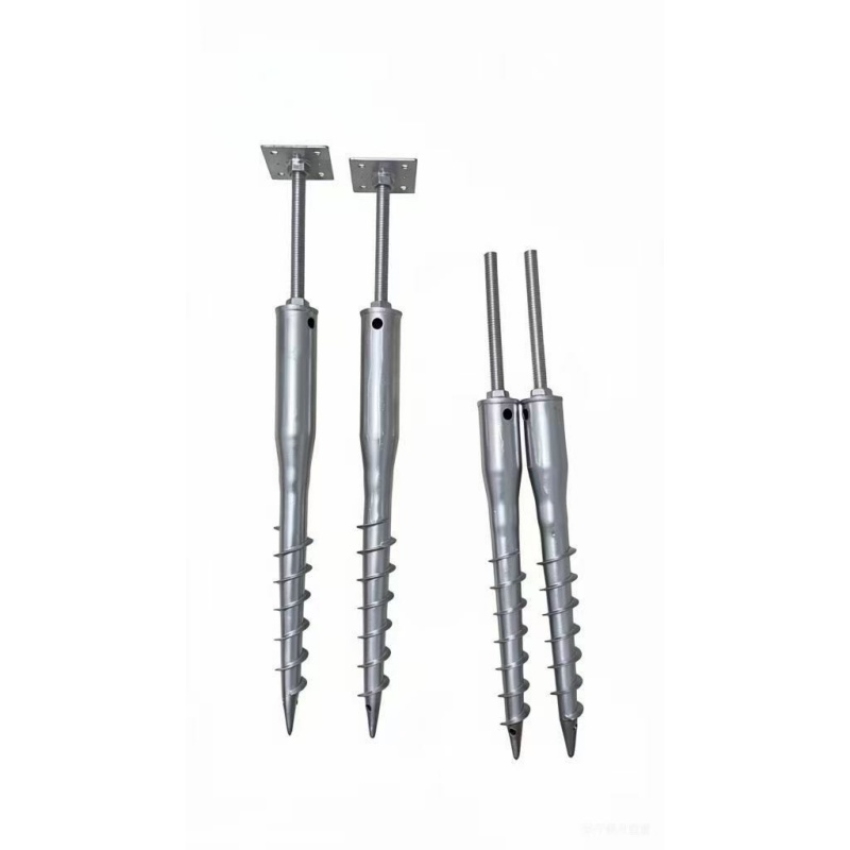
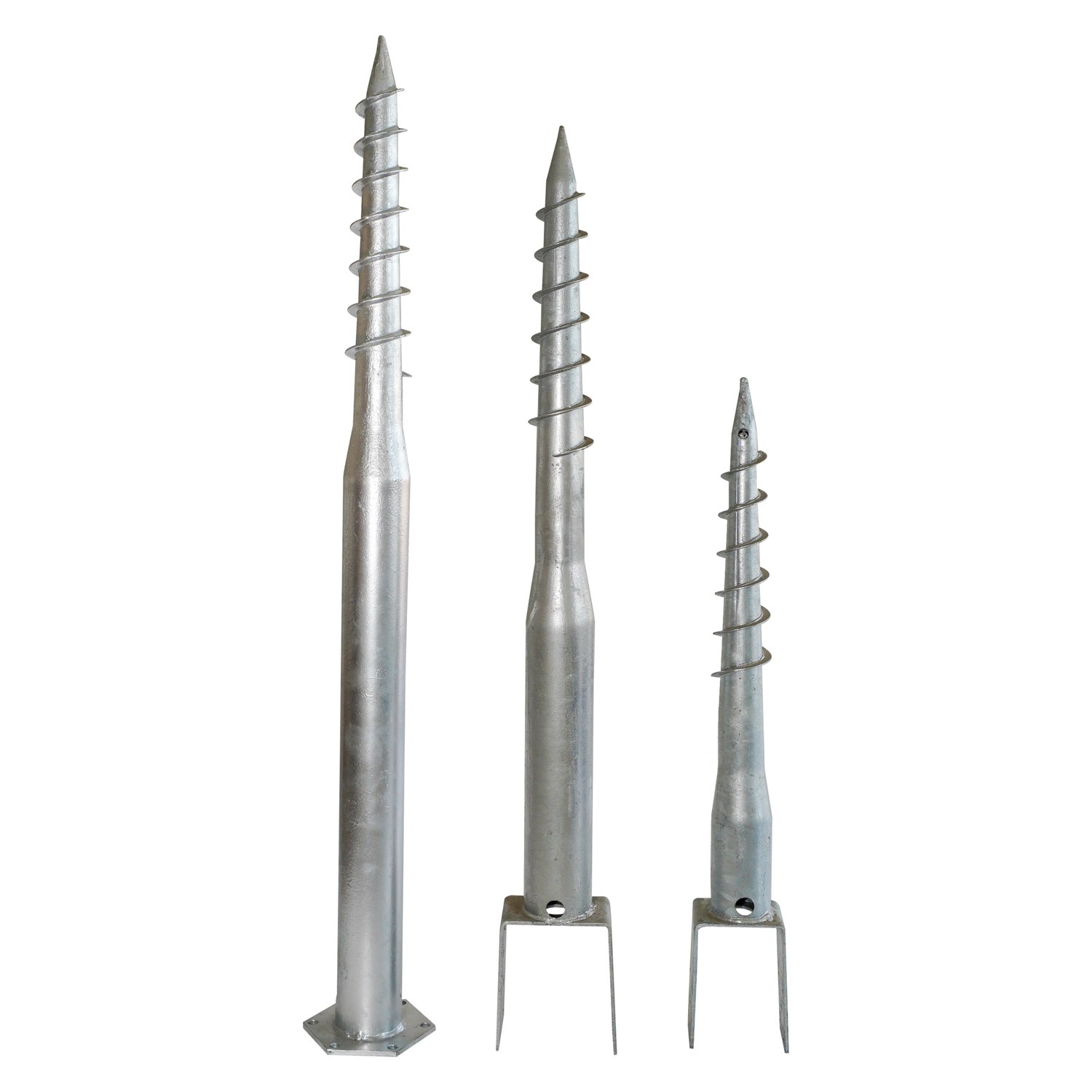
Comparable configurations make that distinction clearer for trade buyers. Sunstone Ruize(STRZ) supplies U shrink-tube ground screws, including these three HDG configurations. The shared wall thickness helps explain why ordering a longer version does not automatically mean ordering a thicker steel section.
|
U shrink-tube configuration |
Overall length |
Tube thickness |
|
U shape 101 × 885 × 1.8 HDG |
885 mm |
1.8 mm |
|
U shape 101 × 1000 × 1.8 HDG |
1000 mm |
1.8 mm |
|
U shape 101 × 1300 × 1.8 HDG |
1300 mm |
1.8 mm |
These dimensions support comparison, not a fence load rating. Actual embedment also depends on the installed head position. For in ground screw anchors, the final choice still needs the matching drawing and performance evidence for the specified fence and soil. None of these lengths is a universal minimum depth for fencing.
The post connection completes the load path
A sound buried screw still needs a suitable connection to the post. The bracket, fasteners and timber must transfer the same forces considered at the foundation. Confirm the actual post dimensions, bracket clearance and fastening arrangement together. A nominal post size is insufficient when the available connection has little tolerance for a mismatch.
Height adjustment is useful where the fence line crosses uneven ground. A screw in ground post support with an adjustable head can help establish the required level. The permitted adjustment and locking arrangement need checking, because extending an exposed connection changes its geometry and must stay within the evaluated assembly.
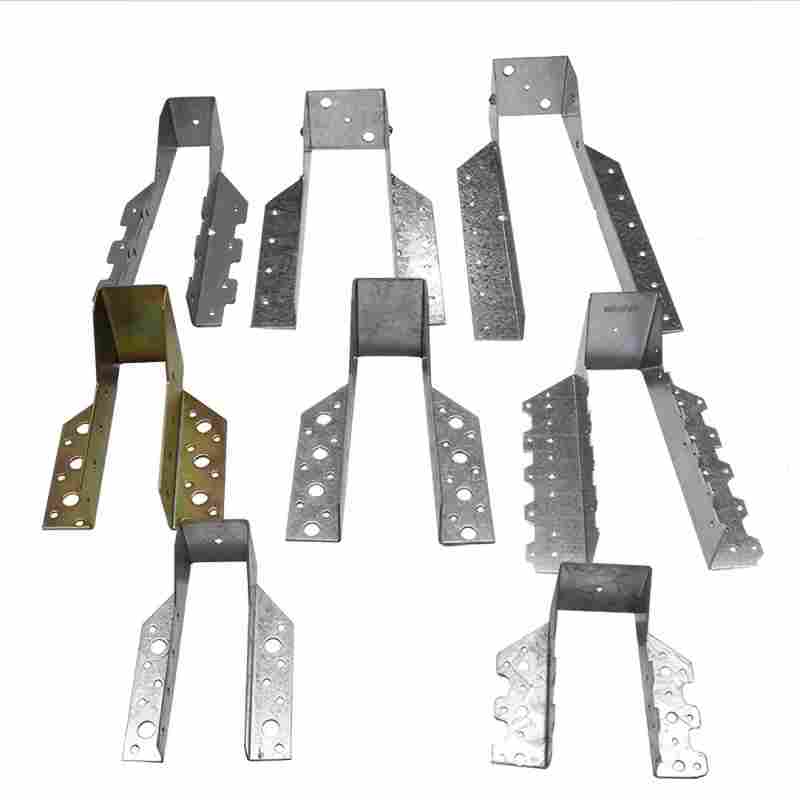
Post anchors also include products that attach to concrete or use driven spikes. They should be distinguished from threaded ground screws when building a distributor’s range. Similar-looking post supports can rely on different foundations, so appearance and bracket shape cannot establish interchangeability.
Underground exposure shapes durability
Corrosion protection needs to suit the soil as well as the visible outdoor environment. Moisture, acidity, chlorides and soil resistivity influence zinc corrosion. Hot-dip galvanizing provides protection, but its presence does not justify promising the same service life at a dry inland site and a persistently wet, aggressive location.
Durability assessment should cover the complete ground screw post anchor assembly. Confirm the specified finish for the screw, bracket and fasteners, and address installation damage using the manufacturer’s repair guidance. A clean-looking sample is useful for checking workmanship; it does not establish how the buried system will age.
A reliable fence needs a matched assembly
Heavy duty selection comes down to a traceable match between fence demand, soil resistance, screw geometry and post connection. For contractors, that match reduces uncertainty before installation. For distributors, it makes product guidance more useful than a broad strength claim and helps prevent the wrong assembly reaching the site.
For a fence supply project, contact our team to discuss ground screw configurations that fit the post connection and the project’s verified foundation requirements.
FAQ
Are ground screws suitable for solid privacy fences?
They can be, when the complete assembly is assessed for the fence’s wind demand and site conditions. Solid panels make lateral loading particularly important. Suitability cannot be inferred from a screw’s vertical capacity alone.
How deep should a fence ground screw go?
There is no single depth for every fence. Soil profile, fence demand, screw geometry and local requirements determine the installation depth. Overall product length also includes any portion remaining above ground.
Is a longer screw always stronger?
No. Additional length may reach more suitable ground, but performance also depends on soil, diameter, wall thickness and the connection. Length comparisons need the same loading basis before they support a selection decision.
Can the same screw support line posts and gates?
Only where the design supports both applications. Gates introduce different forces through their weight and movement. Treat a gate-post foundation as a separate selection rather than copying the ordinary line-post arrangement.
Can ground screws replace concrete without a curing delay?
An appropriately installed and accepted screw foundation has no concrete-curing wait. That can simplify the installation schedule. Soil suitability, connection checks and any required testing still have to be resolved before the fence is loaded.
 Consult
 Whatsapp
 Leave Message
 top
top