






Why Does Weld Joint Design Matter for Hinges

A hinge can look simple until the welded joint begins to pull, twist, or bind. For metal doors, gates, cabinets, and access panels, joint design decides whether the hinge carries movement smoothly or transfers stress into the thin sheet around it.
The Joint Carries More Than the Weld Bead
Joint design matters because the hinge is both a moving part and a structural connection. The weld bead may be visible, but the surrounding sheet metal, hinge leaf, pin line, and load path decide how force moves through the assembly.
Thin sheet metal is less forgiving than heavy plate. Heat can distort it, edge distance can shrink quickly, and a hinge that sits slightly out of line can make the door drag after finishing. Good joint planning keeps the hinge leaf supported before welding begins.
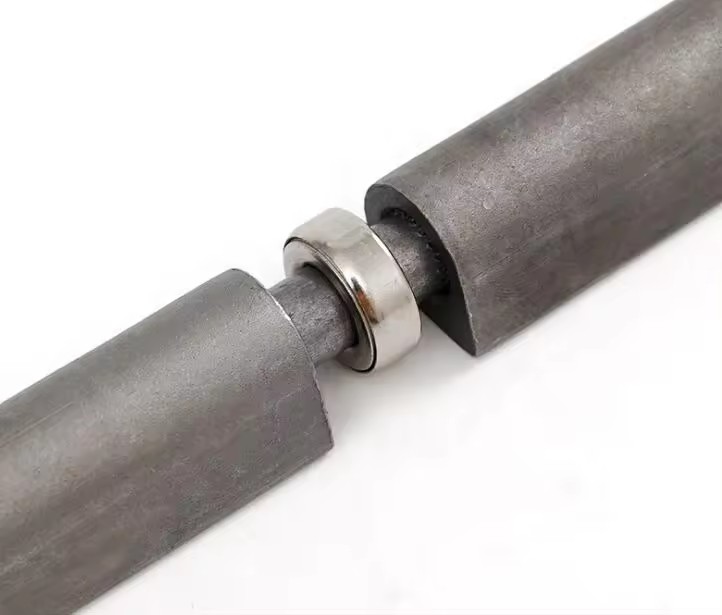
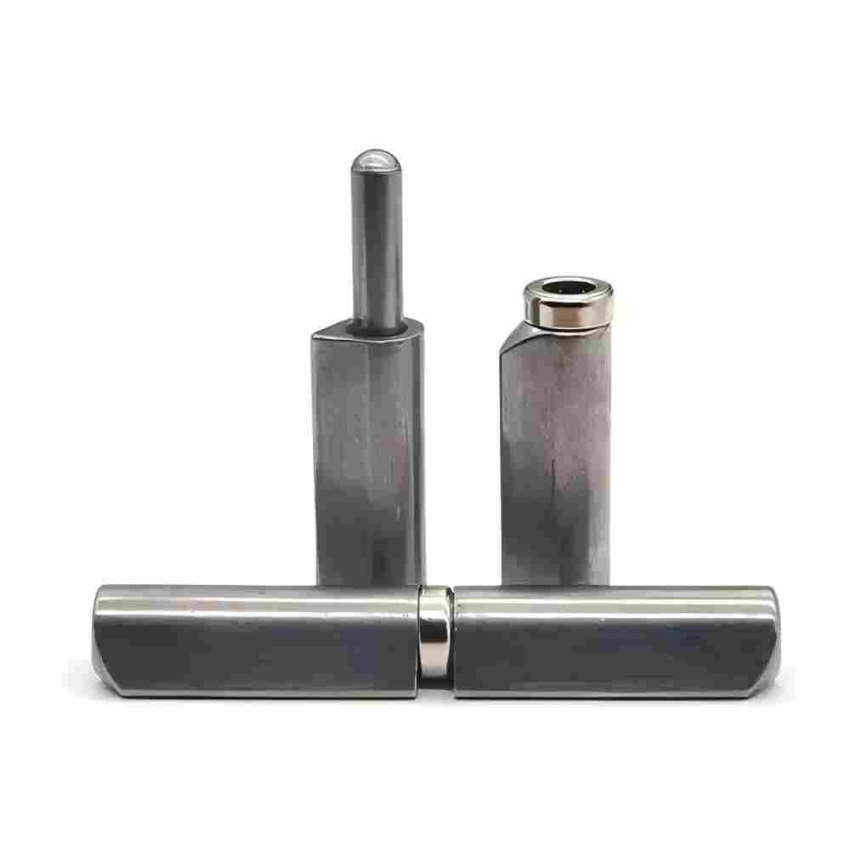
This is why welded door hinges should be reviewed as part of the whole panel geometry. The question is not only whether the hinge can be welded, but whether the joint gives the weld enough stable metal to work with.
Load path affects hinge life
A clear load path reduces fatigue around the weld toe. When a door swings often, impact and vibration repeat through the same small zone. If the hinge leaf sits on a weak edge, the sheet can flex even when the weld itself looks sound.
A better joint spreads force into a reinforced area, a formed return, a backing plate, or a wider mounting surface. That choice helps the hinge move as a controlled pivot instead of becoming a stress concentrator.
Fit-up controls movement before welding
Fit-up is the quiet part of hinge performance. Gaps, burrs, uneven contact, and poor clamping all change how heat enters the part. Once the first weld pulls the leaf out of square, later corrections become slower and less predictable.
|
Joint factor |
Risk if ignored |
Practical response |
|
Hinge leaf support |
Local flexing around the weld |
Use enough contact area or reinforcement |
|
Pin alignment |
Binding after assembly |
Check the pin line before and after tack welds |
|
Heat sequence |
Panel twist or visible wave |
Use balanced welds and controlled cooling |
|
Surface preparation |
Porosity or weak fusion |
Clean coating, oil, and scale from weld zones |
Heat and Alignment Shape the Finished Hinge
Heat control is central to sheet metal welding because the base metal moves as it expands and cools. A hinge joint that looks square during clamping may shift if the weld sequence pulls harder on one side.
Commercial door hardware hinges often fail in service because installation tolerances were treated as a finishing detail. In repeated-use assemblies, a small misalignment becomes noise, friction, coating wear, and eventually customer complaints.
For adjustable weld on gate hinges, joint design must also consider field tolerance. A gate frame can be less precise than a factory panel, so the welded area should leave room for adjustment without forcing the installer to overheat one side.
- Confirm the hinge pin line against the intended swing direction.
- Keep tack welds small enough to correct before the final pass.
- Avoid placing all weld heat on one thin unsupported edge.
- Protect nearby coated or finished surfaces from spatter and discoloration.
A Better Joint Makes Fabrication More Repeatable
When hinges are manufactured in large batches for doors, enclosures, transport, and furniture structures, repeatability becomes important. The joint that is most reliable on a single occasion is not necessarily the best joint for manufacture if there is excessive rework to maintain consistency in positioning.
The objective in practice is the joint that can be positioned, clamped, welded, inspected, and packaged consistently. In this way, the article does not become a welding guidebook – the goal is not to list all possible joints, but rather to explain why the joint should reflect the motion of the hinge.
When a project needs engineered hinge solutions, the early drawings should show hinge load, sheet thickness, weld access, finishing limits, and assembly sequence. Those details let the manufacturer catch risks before tooling or batch production begins.
Where Sunstone Ruize(STRZ) Adds Value to the Decision
Buyers usually notice hinge problems only after the door is painted, packed, or installed. At that stage, the cost is no longer only the part; it includes rework, delayed delivery, replacement labor, and lost confidence in the finished assembly.
Sunstone Ruize(STRZ) supports hinge projects with stamped hinge production, quality steel, and application coverage for doors, cabinets, gates, and industrial uses. For custom work, the useful discussion is about movement, load, finish, and repeatable manufacturing, not simply about making a drawing look weldable.
A custom hinged joint supplier should help the buyer identify where the hinge will be stressed and where the sheet metal needs more support. This is especially important when a project combines standard hinge geometry with a nonstandard frame, access panel, or enclosure.
Summary: Joint Design Protects Motion and Finish
The best weld for a hinge does not have the biggest bead; it allows the hinge to move without bending the sheet it is attached to. From a commercial standpoint, the main lesson is to consider support surface, pin positioning, heating order, and finishing limitations before beginning production.
For hinge projects that need consistent movement and custom metal fabrication, Sunstone Ruize(STRZ) can review the application context and help connect hinge design with practical production requirements.
FAQ (häufig gestellte Fragen)
Why is joint design important for a welded hinge?
Joint design decides how load moves from the hinge into the sheet metal. A poor joint can leave the weld strong but the surrounding panel weak, misaligned, or distorted.
What causes hinge binding after welding?
Binding usually results from incorrect alignment, unequal distribution of heat, improper clamping, or deformation of panels. Although the hinge is securely fastened, its movement direction will no longer be straight.
Are weld-on hinges better than bolt-on hinges?
Weld-on hinges fit applications where a permanent metal connection, clean exterior, or stronger frame integration is needed. Bolt-on hinges are easier to replace and adjust after installation.
Can thin sheet metal hold a welded hinge reliably?
Thin sheet metal can hold a welded hinge when the joint includes enough support area, suitable reinforcement, controlled heat, and realistic expectations for door weight and use frequency.
What should buyers share before ordering custom welded hinges?
Buyers should share the application, material thickness, door or panel weight, swing direction, finish requirement, expected use frequency, and any space limits around the hinge.


 Beraten
 von Whatsapp
 Nachricht hinterlassen
 oben
oben