




Decorative Joist Hangers for Exposed Timber Connections
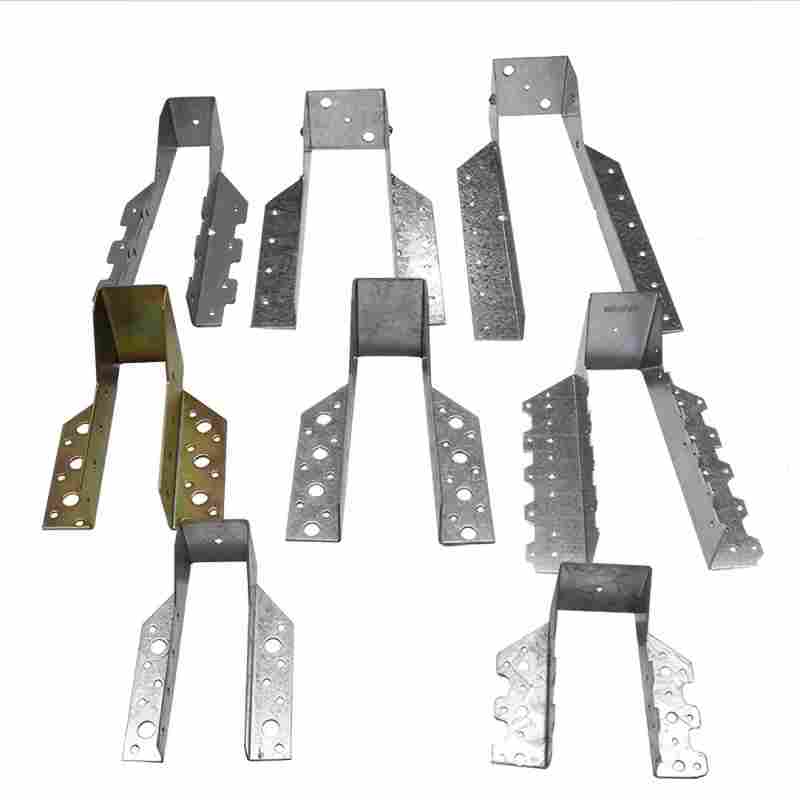
An exposed timber ceiling leaves every connection on view. For contractors and designers working on pavilions, covered walkways or hospitality terraces, hiding ordinary hardware can complicate an otherwise clean design. Decorative joist hangers offer another approach: the connection becomes part of the finished appearance while supporting the joist end. Their usefulness depends on both jobs being resolved together. An attractive bracket still needs the correct geometry, fasteners and verified capacity for its intended connection.
The structural job at the end of a joist
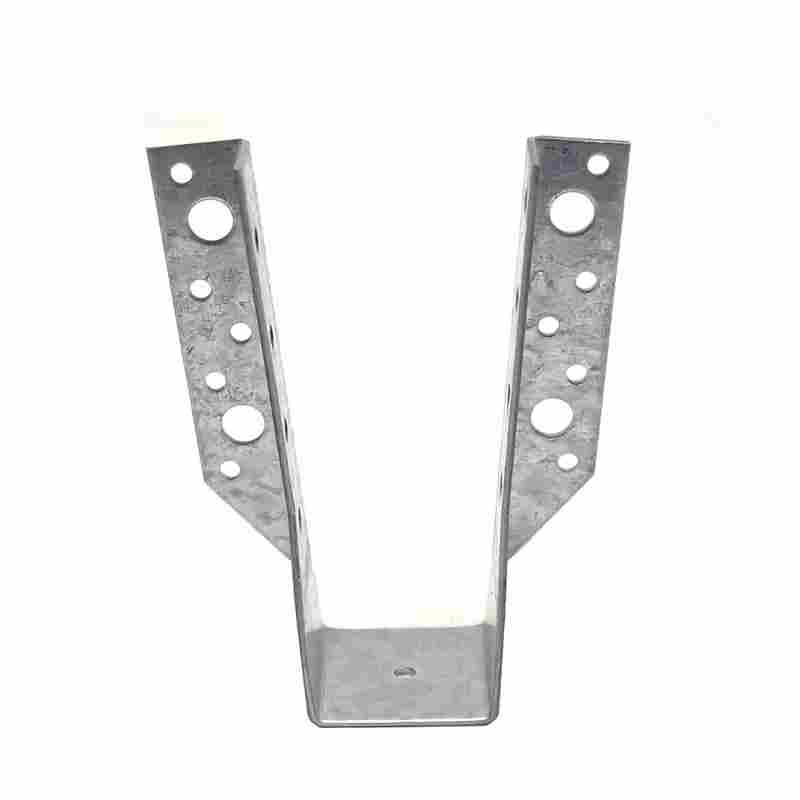
A joist hanger supports a timber member where its end meets a supporting beam or header. Its seat receives the member, while the side plates and specified fasteners complete the connection. This arrangement is particularly useful where the joist sits beside the supporting beam rather than bearing on top of it.
Decorative versions retain that basic purpose while giving visible steelwork a more deliberate appearance. The distinction matters when comparing Holzbalkenbügel: a structural hanger and an ornamental cover can look similar in a photograph, but only the former is intended to carry the connection loads defined for its assembly.
Capacity belongs to the complete connection. Timber properties, hanger geometry, fastener type and installation details affect the result. A thick-looking plate or a broad seat cannot establish an allowable load by itself. For trade teams, the practical question is whether the exact assembly has suitable supporting design information.
Why visible framing benefits from decorative hardware
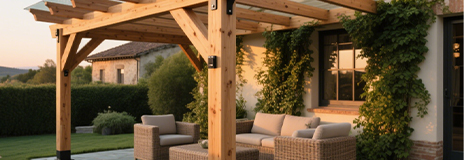
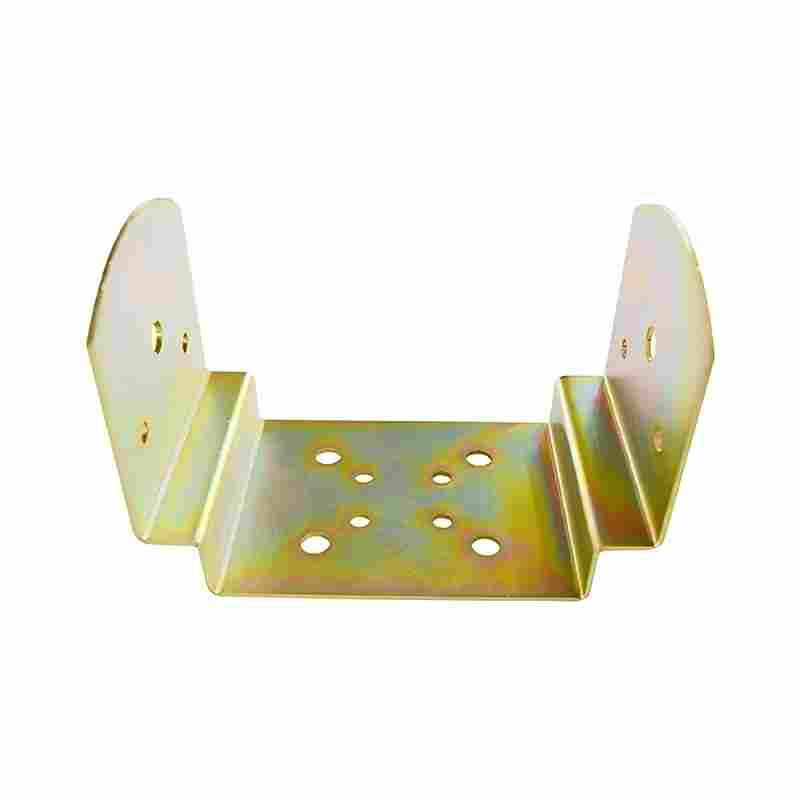
Decorative joist hangers are most useful when the underside or sides of a connection remain visible. A pergola, open pavilion or exposed ceiling makes the hanger part of a repeated architectural detail. Consistent outlines and finishes can give those repeated joints a coherent appearance without boxing in the timber.
The visual benefit becomes smaller when a ceiling or cladding conceals the connection. In that situation, a conventional hanger may perform the required structural job without a decorative treatment. Comparing Holz Steckverbinder Typen therefore begins with the joint location and the intended sightline, as well as the member being supported.
Visible and concealed connectors also create different detailing choices. An exposed decorative hanger deliberately displays metalwork. A concealed connector reduces visible hardware but may require a different timber preparation and assembly sequence. Neither approach is automatically stronger; the choice combines appearance with the requirements of the particular connection.
A simple visual mock-up can resolve the architectural choice. For example, a terrace designer can compare the hanger outline, fastener heads and timber stain together at one representative joint. That review tests appearance only. It does not replace the separate verification of structural suitability.
Fit and fasteners preserve the intended function
The hanger must fit the actual timber section. A nominal timber size can differ from its finished dimensions, and rough-sawn members may need a different seat width from planed stock. A product name alone is therefore insufficient: the seat, member depth and fixing arrangement must suit the real connection.
Hole layout is part of that fit. Within our connector range, Sunstone Ruize(STRZ) offers dimension and hole-position customization for wood connections. This can help align the metalwork with an exposed detail, but a dimensional change still needs an appropriate engineering assessment before the revised assembly is treated as load-bearing.
Fastener selection protects the hanger’s intended performance. Use the specified connector nails or approved structural screws in the required locations. A screw that fits a hole is not necessarily an acceptable replacement. Changing its length, diameter or head can change how forces pass between timber and steel.
Decorative details must leave the structural fixing arrangement workable. Covers, washers and finish choices should be assessed alongside the required fasteners, rather than added after the connection has been resolved. An attractive head pattern cannot justify omitted fixings or an unverified substitution.
The finish must suit the exposure
An outdoor hanger needs a corrosion-protection system as well as an appealing colour. Rain, persistent dampness, preservative-treated timber and coastal exposure create different conditions. The connector and fasteners must be compatible with those conditions and with each other; a black finish alone does not establish suitability.
Zinc protection and decorative colour have different roles. When considering galvanised timber connectors, distinguish the underlying zinc treatment from any additional paint or powder coating. Our galvanized wood-connector options include the following coating ranges. These describe the respective treatment options, not every decorative hanger or a guaranteed service life.
|
Zinc treatment option |
Coating thickness |
Meaning for an exposed connection |
|
Hot-dip galvanizing |
60–85 μm |
Thicker zinc layer; confirm the selected item’s exposure suitability. |
|
Electro-galvanizing |
8–15 μm |
Thinner zinc layer; do not assume the same outdoor protection. |
A finish specification needs to identify the complete system. Confirm the substrate, zinc treatment, optional colour coating and compatible fasteners for the selected item. These thickness ranges alone cannot establish performance in salt exposure or treated timber, and they should not be converted into a promised number of maintenance-free years.
A visible connection with a defined purpose
Decorative joist hangers earn their place where a supported joist end is also an architectural feature. Their value comes from combining a suitable connection with an intentional appearance. For concealed joints, the decorative feature may add little; for exposed framing, it can remove the need to disguise otherwise visible hardware.
For an exposed timber detail, our team can discuss connector dimensions and finish options once the joint arrangement and exposure are defined.
FAQ (häufig gestellte Fragen)
Are decorative joist hangers structural?
Some are load-rated structural connectors; others may be ornamental fittings. Verify the exact product’s intended use and supporting load information. The word decorative describes appearance and does not establish strength.
Where are decorative joist hangers most useful?
They suit exposed joist-to-beam connections in pergolas, pavilions, covered terraces and timber ceilings. Their visual value is greatest where people can see the connection after construction is complete.
Can ordinary screws be used in a decorative hanger?
Only use screws that the hanger specification permits. General-purpose wood screws are not interchangeable with specified connector fasteners merely because they fit the holes or have matching black heads.
Does black powder coating make a hanger weatherproof?
Colour alone does not define corrosion resistance. Assess the underlying metal and protective treatment, the full coating system, the fasteners and the exposure. Conditions involving treated wood or salt need particular attention.
Does a decorative hanger replace other timber connectors?
It performs the connection function for which it was designed. A joist hanger does not automatically replace a post base, beam-to-post connector or separate uplift restraint elsewhere in the structure.


 Beraten
 von Whatsapp
 Nachricht hinterlassen
 oben
oben